

T-money Card: Where to Buy, How to Load, How to Refund
Counted from 345 traveler threads on r/koreatravel, 328 of them from 2023–2026 · Updated August 2026 by the Porta team
Not sponsored. No one can pay to be listed.
The big convenience-store chains sell one. Ask at the counter of the first GS25, CU, 7-Eleven or emart24 you pass, pay ₩3,000 for the card, and load it with cash on the spot. Station information centers and Incheon Airport sell them too. We labeled 13,125 traveler threads; 345 of them bring up T-money, and this page follows what they ask about it: where to buy one, how to load it, where it works, and how to get the balance back. Prices and rules come from T-money's and Seoul's own pages.
What the card is
T-money is Korea's rechargeable transit card. Load it with cash, tap in and out on the subway and city buses, and the fare comes off the balance. No app, no account, no Korean phone number.
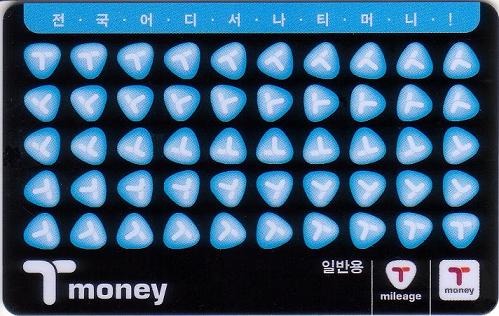
Where to buy one
Convenience-store counters come up in 44 of the 110 T-money threads whose comments we have on file. Those 110 are a subset of the 345, and the denominator for every comment-level T-money count on this page.
“just go to any convince store and ask for t money card” (as written)
r/koreatravel · view thread →
T-money's official chain list runs GS25, CU, 7-Eleven, emart24, MINISTOP, Story Way and 365PLUS. Station information centers sell them, and so does Incheon Airport, though the official list names no terminal or counter; our airport guide maps the arrival halls. Buy from a person where you can. T-money's purchase guide treats the station machines as top-up points only, while the airport railroad sells prepaid cards from its own card machines, so which machines sell varies by station; a staffed counter doesn't. Won for that first load comes out of the 24-hour ATMs in Incheon's arrival halls, which take international cards. If you land after the counters have shut, you are not stranded. The airport buses take cash, and the airport train sells single-use tickets from the machines at its stations.
Plan on one card per person, children included. Each rider taps at the gate, and no official page says whether one card can cover a second passenger's tap. Travelers describe buying one each:
“Also go to a convenience store to register your kid’s tmoney card, it will be about 1/2 the price for them to travel. Infant might be free, I am not sure, but kid will need a card to get through the gates at the stations.”
r/koreatravel · view thread →
Ask the clerk to register the child fare when you buy. T-money's brackets are ages 6 to 12 and 13 to 18, and registration happens at a convenience store or station information center "by presenting Tmoney card and ID card", against the child's date of birth. The guide doesn't say whose ID, whether the child has to be there, or whether the airport counter can register at all, so ask at the counter, and carry the children's passports, the only ID a visiting family has.
Seoul's fare table prices a subway tap at ₩1,400 for an adult, ₩800 for a teenager and ₩500 for a registered child, so ₩3,800 a ride in Seoul for two adults and two children. That is the fare for the first 10 km, with ₩100 added every 5 km beyond it, and city buses charge ₩1,500 on the main routes, ₩1,200 on the small town ones and ₩3,000 on the long-distance red ones. Transfers between subway lines are free, and T-money adds up to four free bus-to-subway transfers, each within 30 minutes and 10 km. That table carries an October 7, 2023 date and is still the one Seoul publishes in English, so budget from it and expect the gate to charge by distance. Load ₩10,000 a head, about seven adult subway taps, and top up as you go.
Loading it
Cash is the default. Hand the card and bills to a convenience-store clerk, or use the machines in a subway station. T-money sets the top-up unit at ₩1,000 and the per-transaction range at ₩1,000 to ₩90,000, against a ₩500,000 ceiling on the balance. Travelers have flagged a change at those station machines:
“FYI, Tmoney vending machines now accept foreign credit cards as of March 17.”
r/koreatravel · view thread →
The change behind that date is real, and narrower than the post implies. Seoul announced that from March 17, 2026, 440 new machines across 273 stations on Lines 1–8 accept internationally issued credit and debit cards at a fee averaging about 3.7%. The announcement covers single-journey tickets and short-term Climate Card passes, mentions no T-money top-ups, and gives no way to tell a new machine from an old one.
The other route around cash is the phone. The mobile T-money app, Apple Pay and EZL (a rival transit card sold in the same convenience stores, with its own mobile version) come up in 27 of those 110 threads. Travelers describe topping up in the app instead:
“If you use the iPhone T-money app (and it works great with very minimal surcharge for topping up, btw), be aware that you have to use an international Mastercard or possibly Amex to top up. None of my Visa cards worked.”
r/koreatravel · view thread →
That is traveler testimony. T-money's English guide states neither whether the app's foreigner option covers every visitor nor which card brands it takes. The physical card asks nothing of your phone.
Where it works
The card works nationwide. T-money describes it as covering buses, subways, taxis, airport buses and express buses, and the subway networks reach Busan, Daegu, Gwangju and Daejeon as well as the Seoul area. Jeju, the holiday island, has no subway, so there the card pays for buses.
That includes the ride out of the airport. Incheon's all-stop airport train takes the tap, and the airport's bus page lists transit cards among the fares accepted on the limousine buses into the city; only the nonstop Express train stands outside, on a separate ticket bought before boarding. VisitKorea's page stretches the card past transport as well, to expressway toll gates, to the pay phones and vending machines inside subway stations, and to "affiliated stores displaying the Tmoney Card logo", convenience stores among them. Long-distance rail is the exception. KTX and the other intercity lines run on reserved seats booked in advance, so a tap won't get you aboard; our KTX guide covers that.
Getting your balance back
How to check what is left on the card is the one thing T-money's guide, Seoul's visitor pages and VisitKorea's all skip. Top up in ₩10,000 chunks so the number stays easy to track, and ask at a convenience-store counter when you do, which is where T-money's own refund instruction sends you anyway, to any of its sales or top-up locations.
A convenience store refunds a balance under ₩20,000 in cash. T-money attaches the ₩500 service fee to the refund itself, so it comes off at the station centers too, once for each card you cash out. Above ₩20,000, go to a subway station customer service center or to T-money Town by Seoul Station Exit 10, which handles anything over ₩50,000; partial refunds happen only at those two. The ₩3,000 card price doesn't come back. T-money's guide is explicit that a refund excludes the cost of the card.
T-money registers the airport as a top-up point and leaves it off the refund list, and says nothing about whether the convenience stores inside the terminals refund, so don't plan on clearing the balance at Incheon on departure day. Run it down on your last rides, or refund at a store on the way out. The card itself has no expiration date, per Seoul's visitor guide.
T-money against the other cards
All five counted cards run through the same query on the same 13,125 labeled threads. T-money leads with 345, ahead of WOWPASS at 118, the Climate Card at 97, Namane at 28 and the Korea Tour Card at 12. Those are mention counts, a measure of what travelers ask about.
| Card | What it is | Where it works |
|---|---|---|
| T-money (345) | ₩3,000, pay per ride | Nationwide: bus, subway, taxi, airport and express buses, plus stores showing the T-money logo |
| WOWPASS (118) | Traveler prepaid card. Payment side: [our paying guide](/guides/paying-in-korea) | Buses, subways and taxis, per its operator |
| Climate Card (97) | Seoul's flat-rate unlimited pass. ₩3,000 card, then ₩62,000 for 30 days (up to ₩70,000 with Seoul's Ttareungi bike share and the Hangang river bus added), or ₩5,000–₩20,000 for a 1, 2, 3, 5 or 7-day pass | Seoul subway and Seoul-licensed city and village buses only |
| Tmoney Travel Card ₩4,000 / Travel Card+ ₩6,000 (not counted separately; they replace the Korea Tour Card, 12 threads) | The + adds WOWPASS payment and balance management | Not stated on T-money's page, which gives only where you buy them: convenience stores, plus Incheon Airport's staffed bus ticket counter for the ₩4,000 card |
| Namane (28) | In 4 of the 7 of those 28 threads we have comments for, travelers describe a customizable prepaid debit card that doubles as a transit card | Unverified: namanecard.com and its English service page refused our requests, and its shop page is gone |
“Climate card only works in Seoul. You can use TMoney throughout Korea.”
r/koreatravel · view thread →
Seoul's policy page backs that by exclusion. No Sinbundang Line (a separately run line calling at Sinsa, Gangnam, Pangyo and Jeongja on its way to Gwanggyo), no subway outside Seoul, no intercity or airport buses. The 30-day pass recharges until August 31, 2026, and its successor Climate Card Plus arrives on September 1 for Korean nationals; Seoul's page says nothing about what happens to the short-term passes after that.
FAQ
Where can I buy a T-money card?
At convenience-store counters across Korea (GS25, CU, 7-Eleven, emart24, MINISTOP, Story Way and 365PLUS are the chains on T-money's official list), at subway station information centers, and at Incheon Airport. T-money's purchase guide sends you to the station machines only for topping up, and which machines sell cards varies by station, so a staffed counter is the reliable stop.
How much does a T-money card cost?
₩3,000 for the plain card on T-money's official price list, before any balance you load onto it. That ₩3,000 is not refunded later. A Seoul subway ride then costs ₩1,400 for an adult and ₩500 for a registered child, on Seoul's fare table dated October 7, 2023, plus ₩100 for every 5 km past the first 10.
Can I top up a T-money card with a foreign credit card?
Plan on cash. Seoul announced that from March 17, 2026, 440 new machines on Lines 1–8 take internationally issued cards at a fee averaging about 3.7%, but that announcement covers single-journey tickets and short-term Climate Card passes, and mentions no T-money top-ups. The mobile T-money app, Apple Pay or EZL come up in 27 of the 110 T-money threads whose comments we have on file, where travelers describe topping up in the app instead, some reporting a Mastercard accepted where Visa was refused. T-money's English guide states neither whether the app's foreigner option covers every visitor nor which brands it takes.
How do I get my leftover T-money balance back?
A convenience store refunds balances under ₩20,000 in cash. T-money charges a ₩500 service fee on the refund itself, wherever you do it, and each card you cash out is its own refund. Larger balances go to a subway station customer service center or to T-money Town by Seoul Station Exit 10, which handles anything over ₩50,000. T-money lists Incheon Airport as a top-up point, not a refund point, so clear the balance before departure day.
Do my kids need their own T-money cards?
Travelers in the Reddit threads we counted buy one card each, since each rider taps at the gate; T-money's English guide states no rule either way. Ask the clerk to register the child fare when you buy, which brings the Seoul subway tap down to ₩500 for ages 6 to 12. Registration takes the card and an ID card, and since the guide never says what a foreign child should show, carry their passports.
Related guides
Stuck on something? Ask us.
No account, no app. We answer every week and the answer stays here.
How this guide is made: out of 13,125 traveler-relevant threads from r/koreatravel and three sister subreddits, 345 name T-money in the post title or body (328 of them from August 2023–August 2026), and the rival-card counts run on the same query. A mention measures what travelers ask about, not what they recommend, and the few figures counted inside the comments we have on file say so where they appear. Direct quotes appear as written, each linked to its thread. Transit, prices, and schedules are checked against the operators' official pages.
About Porta: we build Korea guides from counted community recommendations, and the recommended places get pages of their own. Owners can claim their page — claiming hands them the controls and the visitor stats, never a spot in a guide. A listing here can't be bought; the counts decide.
Photos: T-money card: zisk, Wikimedia Commons, public domain